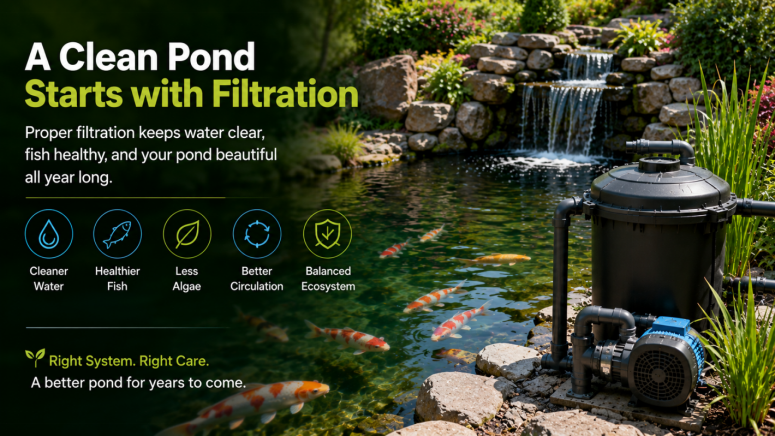
Many pond owners spend a lot of time choosing fish, plants, rocks, and waterfalls. Everything looks great at first. Then, after a few weeks or months, the water starts looking cloudy. Algae begin to grow, and the pond no longer looks as clean as it once did.
This is where many pond owners realize they overlooked one important thing: filtration.
A good pond and filter setup works quietly in the background every day. It helps remove waste, improve water quality, and create a healthier environment for fish and plants. Without proper filtration, even the most beautiful pond can develop problems.
That’s why experienced pond enthusiasts carefully watch over their filtration systems. Many rely on trusted brands like Aqua bead for dependable solutions that help keep ponds cleaner and healthier.
Why Pond Water Gets Dirty Faster Than Expected?
A pond may look calm on the surface, but a lot is happening underneath. Fish produce waste every day. Leaves fall into the water. Wind carries dirt and debris into the pond. Leftover fish food can also sink to the bottom and begin breaking down.
Over time, all this waste starts to affect water quality. The pond may become cloudy, develop unpleasant odors, or experience algae growth.
Many people try to solve these problems after they appear. A better approach is to prevent them from happening in the first place. That is exactly what a well-designed pond and filter system is meant to do.
What Does a Pond Filtration System Actually Do?
Many people think a filter only catches dirt and debris. In reality, a pond filtration system does much more. Most systems perform two important jobs. The first is mechanical filtration. This part removes visible debris such as leaves, fish waste, and other particles floating in the water.
The second is biological filtration. This is where beneficial bacteria become important. These helpful bacteria live inside the filter and break down harmful waste before it can create water quality problems.
Together, these processes help keep pond water cleaner and healthier. Without filtration, waste would continue to build up, making it harder for fish and plants to thrive.
Why a Pond Pump Matters So Much?
A filter cannot work properly without moving water. This is where a pond pump plays an important role. The pump moves water through the filtration system. As water passes through the filter, debris is removed, and beneficial bacteria have a chance to do their job.
Increased oxygen levels in the pond are also facilitated by good water movement. For fish to survive, oxygen is necessary. Healthy water circulation benefits plants as well. Water that is rich in oxygen is necessary for even helpful bacteria to thrive. The entire pond ecosystem is kept balanced and healthy with a well-matched pond pump and filter setup.
One Common Mistake Pond Owners Make
One of the biggest mistakes pond owners make is choosing equipment based only on pond size. While pond size matters, it is not the only factor. The number of fish also affects filtration needs. A pond with a few goldfish creates much less waste than a pond filled with large koi.
Filtration needs may also be influenced by plant cover, water features, and feeding practices. For this reason, rather than purchasing the smallest system possible, many seasoned pond maintainers advise planning for future expansion. In many cases, a slightly larger filtration system works better and requires less maintenance.
Why Koi Ponds Need Extra Filtration?
Koi are among the most popular pond fish in the world. They are colorful, friendly, and enjoyable to watch. However, they also produce a significant amount of waste.
As a result, compared to decorative ponds with fewer fish, koi ponds usually require stronger filtration. In addition to supporting healthy water conditions, a high-quality pond filtration system helps manage this additional waste. Koi ponds can easily develop murky water and low water quality if there is insufficient filtration.
This is one reason many serious koi enthusiasts invest in advanced filtration systems designed to manage heavier biological loads.
The Benefits Go Beyond Clear Water
Most pond owners want crystal-clear water. While filtration certainly helps improve water clarity, the benefits do not stop there.
1. Healthier Fish
Clean water helps reduce stress on fish and supports overall health.
2. Less Algae Growth
Filtration removes waste and nutrients that algae often depend on to grow.
3. Better Oxygen Levels
Proper circulation helps distribute oxygen throughout the pond.
4. Easier Maintenance
A good filtration system reduces the amount of debris and sludge that can build up over time.
5. Improved Water Quality
Consistent filtration helps maintain a more stable environment for fish and aquatic plants.
When all these benefits work together, the pond becomes easier to manage and more enjoyable to own.
How to Choose the Right Pond Pump and Filter?
Not every pond requires the same setup. Several factors should be considered before choosing a pond pump and filter system.
1. Pond Size Matters
Larger ponds require more filtration capacity because there is more water to process.
2. Fish Population
More fish means more waste. Heavily stocked ponds generally need stronger filtration.
3. Water Flow Rate
The pump and filter should work together efficiently. Water should move through the system at a rate that allows proper filtration.
4. Future Plans
Many pond owners add more fish over time. Choosing a system with extra capacity can help avoid future upgrades.
5. Maintenance Needs
Some systems are easier to clean than others. Considering maintenance requirements can save time in the long run.
Brands such as Aqua bead have become popular because they offer advanced filtration solutions that help pond owners manage water quality more effectively.
Don’t Forget About Winter Pond Care
In spring and summer, many people focus on pond maintenance. Winter, though, can also be difficult. A pond’s operation is altered by cold weather. Waste can still build up even though fish become less active. Gas exchange may become restricted in places where ponds freeze.
This is where a pond heater can be helpful. A pond heater helps keep a small opening in the ice, allowing harmful gases to escape while fresh oxygen enters the water.
While a pond heater does not replace filtration, it can be a valuable tool for supporting healthier pond conditions during colder months. Combining proper filtration with seasonal maintenance helps ponds stay healthier throughout the year.
Simple Maintenance Habits That Make a Big Difference
Even the best filtration system needs occasional attention. Fortunately, pond maintenance does not have to be complicated.
A few simple habits can help keep everything running smoothly.
v Regularly remove leaves and debris.
v Look for buildup in the filter.
v Keep an eye on the pump’s water flow.
v Check for wear and tear on the equipment.
v Keep an eye out for signs of stress in fish.
v Clean filters according to manufacturer recommendations.
Consistently performing small maintenance tasks often prevents larger problems later.
Don’t Let Dirty Water Steal the Show
A healthy pond does not happen by accident. It is the result of good planning, proper equipment, and regular care. The right pond and filter setup helps remove waste, improve water quality, and create a healthier home for fish and plants.
When combined with a dependable pond pump, effective filtration can prevent many common pond problems before they begin.
Many pond owners spend time trying to fix green water after it appears. A smarter approach is creating a system that helps keep water balanced from the start. That is why filtration remains one of the most important parts of successful pond care. For pond enthusiasts looking for advanced filtration technology, Aqua bead continues to be a trusted name for solutions designed to support cleaner water, healthier fish, and a more enjoyable pond experience.
FAQs
1. What is the purpose of filtering a pond?
Filtering a pond removes waste, debris, and harmful compounds while supporting healthier water conditions.
2. Why is a pond pump important?
A pond pump moves water through the filtration system and helps improve circulation and oxygen levels.
3. How often should pond filters be cleaned?
Cleaning schedules vary, but filters should be checked regularly and cleaned whenever debris begins to reduce water flow.
4. Do small ponds need filtration?
Yes. Small ponds can develop water quality problems quickly, making filtration just as important as it is in larger ponds.
5. Why are koi ponds more demanding?
Koi produce more waste than many other pond fish, which means stronger filtration is usually required.
6. Can a pond heater help during winter?
Yes. A pond heater helps maintain an opening in ice-covered ponds and supports better gas exchange.
7. Are advanced filtration systems worth it?
Many pond owners find that advanced systems help improve water quality, reduce maintenance, and support healthier fish over the long term.