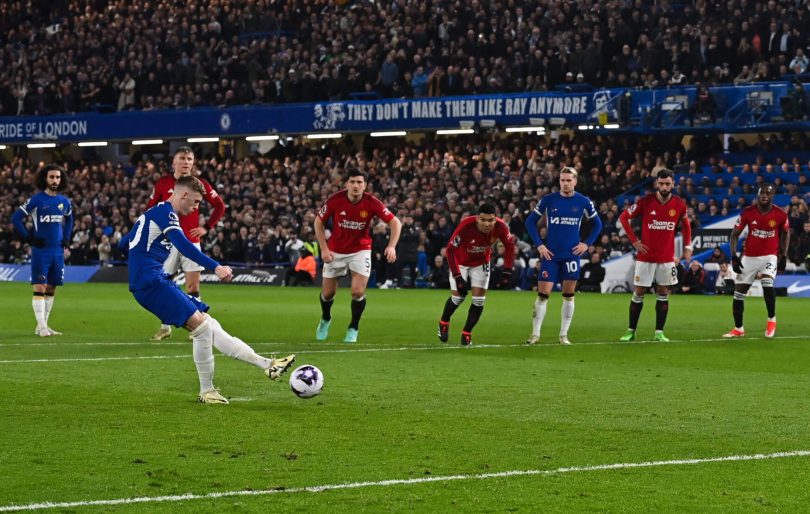

Penalties in the 2023/24 Premier League season were not random flashes of luck but repeated patterns tied to tactics, defensive habits, and refereeing interpretations, with certain clubs consistently winning spot-kicks and others repeatedly conceding them. Understanding who benefited most, who suffered most, and how often penalties were converted allows bettors and analysts to separate sustainable trends from one-off incidents when judging team performance and odds.
Why penalties became such a central theme in 2023/24
Penalties gained outsized importance in 2023/24 because the combination of VAR, high defensive lines, and more aggressive pressing increased the number of borderline decisions inside the box. Over the 2023/24 campaign, penalties were scored at roughly 0.26 per game—around one successful spot-kick every four matches—making them one of the most reliable sources of goals in the league. At the same time, conversion rates reached close to 90%, turning each award into something very close to a guaranteed goal and magnifying its impact on tight contests.
This shift did more than just inflate scorelines; it reshaped in-game risk management for both defenders and attackers. Defenders who mistimed challenges or pulled shirts in crowded penalty areas were punished more consistently, while forwards who could engineer contact or exploit tight spaces near the byline added a dependable goal route to their team’s attacking profile. As a result, some clubs began tilting their attacks toward zones and patterns that historically drew more penalties, reinforcing the trend and making spot-kicks a strategic, not merely accidental, feature of their season.
Which teams won the most penalties in 2023/24?
Penalty awards were heavily concentrated among a small group of clubs whose playing styles and personnel repeatedly forced defenders into desperate interventions. Chelsea topped the Premier League in penalties won with around 11 during the 2023/24 campaign, followed by Arsenal and Newcastle United on roughly nine, with Liverpool close behind. These numbers reflect not just attacking quality, but also how often these teams drove the ball into the box, combined quick interchanges under pressure, and isolated defenders one-on-one in risky zones.
The cause-and-effect chain here starts with sustained possession in advanced areas and high-volume box entries. Teams that kept the ball in and around the area and used skilful dribblers or underlapping runs saw more clumsy tackles, handball incidents, and rushed challenges from defenders fearing a clear shot on goal. The outcome was a steady stream of spot-kicks that padded goal totals and swung tight matches, while the impact extended to expected goals models and betting markets, which had to treat these sides as more penalty-prone in attack than league averages justified.
Which clubs conceded penalties most frequently?
On the other side, a different cluster of teams repeatedly put themselves in dangerous defensive situations and paid the price from the spot. Data on penalties conceded in 2023/24 shows West Ham United at the top with around 10 penalties given away, followed by Everton, Fulham, and Wolves with approximately eight each, and Tottenham, Burnley, and Manchester United also near the high end with about seven conceded. These numbers point toward deeper structural issues rather than isolated bad luck, including slow defensive transitions, poorly timed tackles, and chaotic penalty-box defending under pressure.
The outcome of these habits was not only a leak of easy goals but also a reputation effect: referees, consciously or not, may become more comfortable pointing to the spot when the same defenders repeatedly make late lunges or grab shirts in crowded areas. That perception, combined with VAR scrutiny, reinforced a cycle where these teams had to defend under the psychological weight of prior concessions. The impact for analysts and bettors is straightforward—clubs with an established pattern of conceding penalties carry higher defensive risk than their raw “goals conceded from open play” numbers might suggest.
Comparing penalty winners and frequent conceders
The contrast between teams that consistently won penalties and those that conceded them exposes how attacking and defensive choices interact over a full season. On one side, clubs such as Chelsea and Arsenal used dynamic movement, overlapping full-backs, and technically skilled forwards to create repeated penalty situations, often by inviting pressure in tight channels. On the other, sides such as West Ham, Everton, Fulham, and Wolves often faced waves of pressure, defending deeper and making last-ditch challenges that raised the odds of fouls in the area.
A simplified view of these trends can be illustrated in a compact table based on 2023/24 figures:
| Category | Team examples | Approx. penalties (2023/24) | Key trait |
| Most penalties won | Chelsea, Arsenal, Newcastle, Liverpool | 9–11 | High box occupation, dribblers drawing contact |
| Most penalties conceded | West Ham, Everton, Fulham, Wolves, Spurs, Man Utd | 7–10 | Deep blocks, late challenges under pressure |
The value of this comparison lies not only in ranking teams but in highlighting how stylistic choices shape risk at both ends of the pitch. Attacking sides that relentlessly probe inside the box also accept the risk of transitions, while conservative teams that sit deep must defend more crosses and scrambles in crowded spaces, where small mistakes are magnified by VAR and modern refereeing guidance. For betting models, both patterns require adjustments beyond simple attack and defence ratings, because penalty incidence adds a discrete, high-impact event to match dynamics.
Why high-frequency penalty teams matter to bettors
From a betting perspective, teams at either end of these tables demand special treatment in pricing and risk assessment. Clubs with a record of winning many penalties effectively carry a higher baseline expected goals figure than their shot totals alone would suggest, since a portion of their threat comes from engineered fouls rather than open-play chances. Conversely, sides that routinely concede spot-kicks bring a hidden defensive liability, particularly in tight handicap lines or low-total matches where a single penalty can blow up a carefully constructed under bet.
The mechanism is simple: each incremental increase in penalty probability translates into a discrete jump in the distribution of possible scorelines. Bettors who incorporate historical penalty tendencies into their modelling can more accurately price overs markets, goalscoring props, and both-teams-to-score bets when these high-variance teams face each other. Ignoring these patterns means assuming that all sides are equally likely to be involved in spot-kick events, an assumption that 2023/24 data clearly contradicts.
Record-high penalty conversion and its consequences
The 2023/24 season did not just feature many penalties; it produced unusually efficient finishing from the spot. Across the campaign, close to 89–90% of penalties were converted, the highest rate in Premier League history and significantly above the long-term average around the low 80% range over the previous four seasons. This improvement is linked to better preparation, more detailed goalkeeper scouting, and the emergence of specialised takers who refine run-ups and deception techniques with data and video.
The outcome is that a penalty is closer than ever to a guaranteed goal, which amplifies its weight in expected goals models and match projections. When nearly nine in ten penalties result in a goal, every additional spot-kick has a disproportionate impact on probabilities of overs, comebacks, and upsets, particularly for underdogs who rely on set-pieces and penalties to compete with stronger sides. The impact for betting and tactical planning is clear: penalty volume and conversion rates are no longer marginal details but central pillars of how certain teams create and concede goals over a 38-match season.
Data-driven betting perspective on penalty trends
For data-led bettors, the penalty landscape in 2023/24 highlighted the importance of integrating discrete event probabilities into broader models, rather than treating penalties as noise around open-play performance. Because teams such as Chelsea, Arsenal, and Newcastle repeatedly drew penalties, their match expected goals profiles required an adjustment upwards relative to their non-penalty xG, especially in fixtures against defenders known for clumsy or last-ditch challenges. Similarly, sides such as West Ham and Everton needed a defensive downgrade to account for their tendency to concede spot-kicks, particularly when facing dribble-heavy opponents.
In more advanced models, penalty propensity can be treated as a team and player-level parameter influenced by style, personnel, and officiating patterns. Over time, tracking both penalties for and against allows bettors to estimate which teams are genuinely “penalty-dependent” and which are simply in the middle of a short-term variance swing that will normalise. The impact of this approach during and after 2023/24 was a clearer separation between sustainable trends—such as teams with multiple expert penalty takers and box infiltrators—and noise driven by a brief cluster of VAR calls or unusual refereeing interpretations.
How structured bettors might apply these insights on UFABET
When turning these trends into practical action, structured bettors need to think about how different betting destinations present and update markets around penalties. In situations where a club with a high penalty profile faces a side that frequently concedes spot-kicks, props on total goals, anytime scorers, and penalty-related specials can become more attractive, particularly on a busy sports betting service such as ufabet168 guru, where a wide menu of side markets may adjust at different speeds. The key is not to overreact to one or two recent calls, but to blend multi-season penalty data with current-season trends and tactical context, using that combined picture to judge whether the offered odds genuinely reflect the increased likelihood of a game being decided from twelve yards.
How penalty habits intersect with casino online behaviour
Penalty-heavy seasons can also influence how some bettors allocate their time and bankroll between football markets and other gambling activities. When match outcomes appear to hinge repeatedly on refereeing calls and VAR interventions, the sense of unpredictability—whether justified or not—may nudge some people toward environments such as a casino online setting, where the randomness is transparent and governed by fixed house edges rather than officiating judgment. This shift has an important analytical implication: while data-driven bettors can still exploit predictable penalty tendencies over large samples, those who become overly focused on short-run “bad beats” from contentious spot-kicks risk abandoning informational advantages in favour of games where no such edge exists, underscoring the need to distinguish emotional reaction from long-term expected value.
Summary
The 2023/24 Premier League season showcased a clear pattern: a small group of clubs repeatedly won penalties through aggressive, box-focused attacking play, while another set consistently conceded them through pressured, error-prone defending. Combined with a record-high conversion rate around 89–90%, these trends made spot-kicks closer than ever to guaranteed goals and materially shifted match outcomes, goal totals, and betting lines. For analysts and bettors, the key lesson is that penalties are not random quirks but structurally driven events that must be modelled separately, with team-specific tendencies for and against incorporated into any serious evaluation of performance, risk, and odds over the course of a Premier League season.