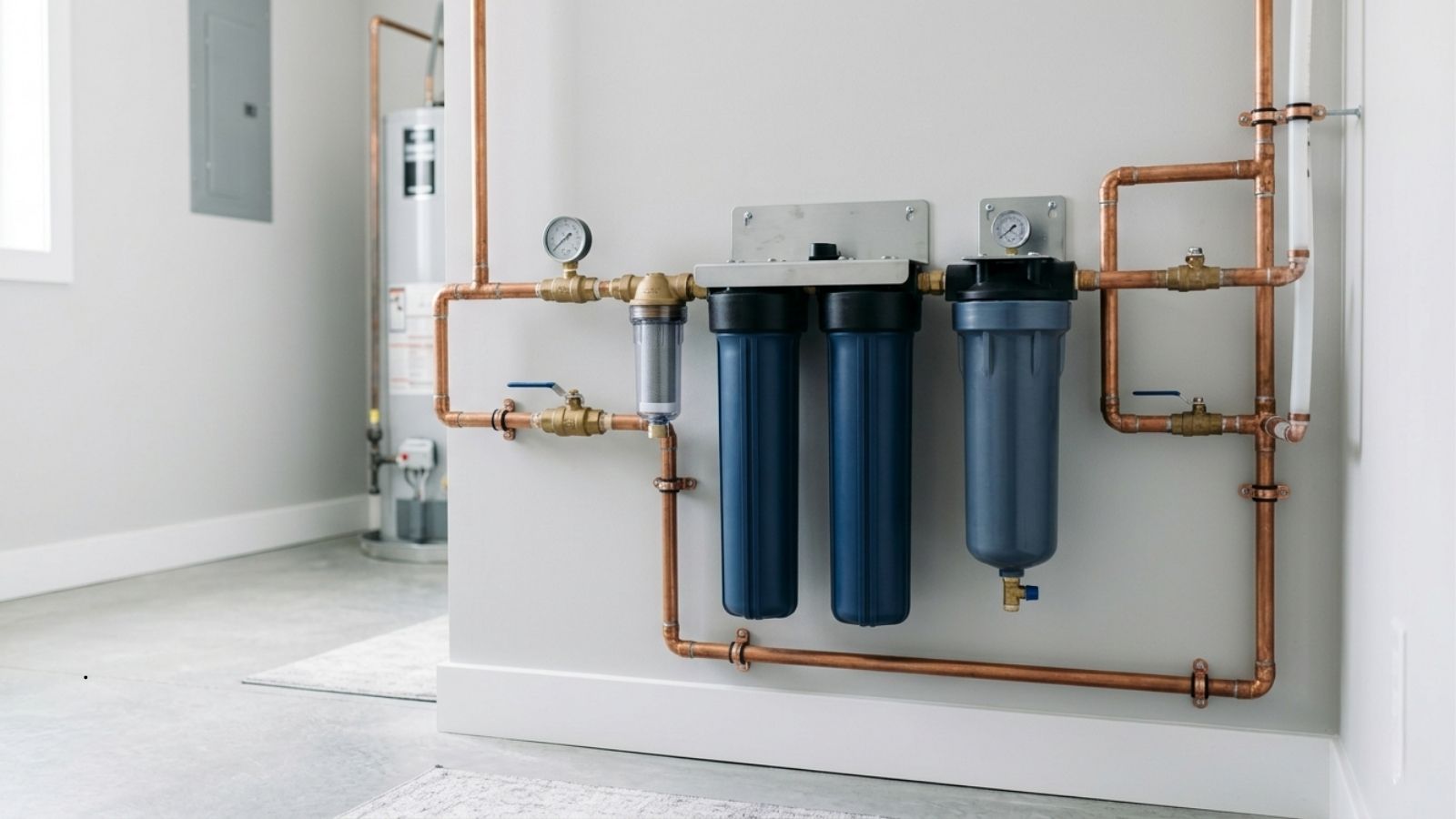
Filtered water is one of those upgrades people think about for months before doing anything. The pitcher in the fridge works, mostly. Then someone mentions a plumbing solution from Tennessee Standard Plumbing in West Knoxville that treats the entire house, and the question becomes whether that’s overkill or the obvious answer.
It depends, and the honest version of that answer is more useful than a sales pitch. Whole home filtration and point of use filters solve different problems, and neither one solves every problem a household might have with its water.
What Does Whole-Home Water Filtration Actually Do?
It treats water where the main line enters the house, so every fixture downstream draws from the same treated supply. Showers, laundry, kitchen taps, and outdoor spigots are all fed by it. That’s the difference between whole-home treatment and a filter attached to a single faucet.
What it treats depends on the system and on what’s in the water to begin with. Some setups are aimed at taste and odor. Others target hardness or sediment. They aren’t interchangeable, which is why testing the water matters more than picking a product first.
It also helps to know what whole home treatment isn’t. It isn’t a repair, and it doesn’t make every water complaint disappear. It treats the supply coming into the house. Anything caused by the pipes themselves, or by one failing fixture, is a separate conversation with a separate answer.
How Is That Different From a Filter Under the Sink?
A point of use filter treats water at one fixture, usually the kitchen tap. It’s smaller, simpler, and less involved to live with, and it does nothing for the water reaching the shower or the washing machine. Whole home treatment covers the house but asks more of the plumbing.
Plenty of households run both. A whole home system handles what affects the whole house, and a point of use filter polishes drinking water at the sink. Which combination makes sense depends on what a water test shows and on what the household actually notices day to day.
Upkeep differs too. A filter at the sink is something most households handle themselves. Whole home equipment is usually serviced on a schedule, and the manufacturer’s documentation spells out what that involves. Neither is difficult, but they aren’t the same commitment, and that’s worth knowing before anything gets installed.
- Whole home: every fixture downstream draws treated water
- Point of use: one fixture, usually the kitchen sink
- Both together: house wide treatment plus drinking water at the tap
How Do West Knoxville Homeowners Know Which One They Need?
By testing the water first. A test shows what’s actually present rather than what’s assumed, and that determines whether treatment is worth doing at all. From there, a licensed plumber can explain which options suit the home’s plumbing and which ones don’t fit the situation.
It also helps to name the complaint precisely. Spotting on glassware, a taste that comes and goes, film on fixtures, and skin that feels dry after a shower are different issues, and they don’t all lead to the same answer. Vague dissatisfaction with the water tends to produce a system nobody ends up happy with.
Good questions to bring to that conversation: what did the test find, which of those findings would this system address, what does upkeep look like, and what happens if the household’s water changes later. Answers to those four tend to separate the useful recommendations from the generic ones.
Conclusion
Whole home filtration is worth understanding before it’s worth buying. Test the water, name the specific problem, then talk through the options with a licensed plumber who can look at the house itself. Skipping straight to a product is how households end up treating something that was never the issue. A household that knows what its water actually contains is in a far better position than one shopping on instinct.
Frequently Asked Questions
Does whole-home filtration soften water?
Not necessarily. Softening and filtering are different jobs, and some systems do one while others do both. The water test and the product documentation settle it.
Will every tap have filtered water?
With a whole home setup, every fixture downstream of the unit draws treated water, including showers and laundry.
Is a point-of-use filter enough on its own?
For drinking and cooking at one sink, often yes. It won’t change the water anywhere else in the house.
Does a filtration system need maintenance?
Yes. Filters and media need attention over time, and the manufacturer’s documentation sets the schedule for the specific system.
Does water testing cost anything?
It varies by provider and by the type of test. A licensed plumber or the local water utility can explain which testing options are available.
6634 Central Ave Pike #108, Knoxville, TN 37912
Phone: (865) 333-4321