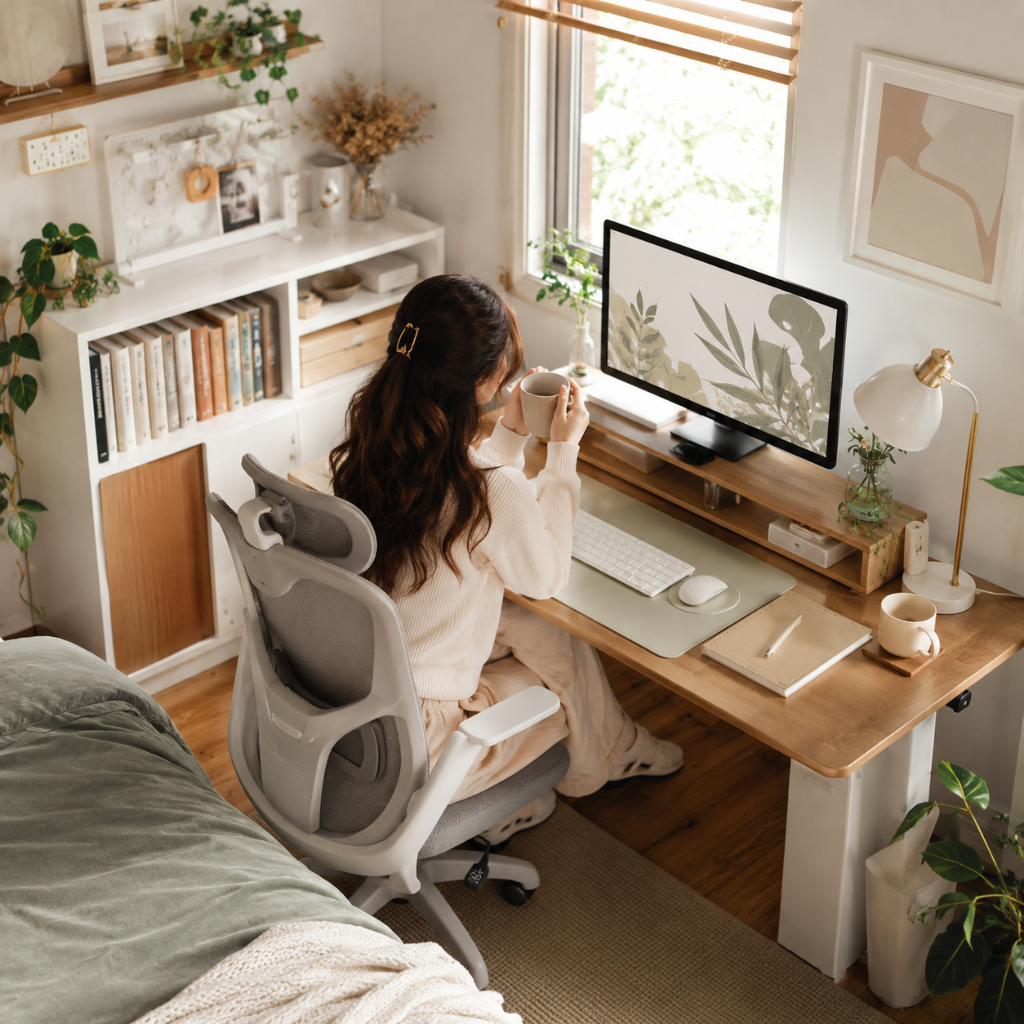
Introduction: Redefining the Architecture of the Modern Home Office
Working from home was supposed to feel relaxing. Instead, plenty of people find their focus slipping the moment their desk starts to look too much like the rest of the living room. There’s a real tension here: enough comfort to make long hours bearable, without losing the sharpness a proper workspace demands.
Visual clutter is usually the culprit when concentration breaks down, more than people give it credit for. Loose papers, tangled cables, a desk that’s never quite clear. Small things, but they pull attention away from the actual task more than most of us notice in the moment. The fix isn’t more discipline. It’s a room built to support focus by default, so that showing up to it each morning stops feeling like a chore.
1: Unique Study Room Designs Structured for Peak Productivity
Desk placement matters more than most people give it credit for. A workspace facing a window, catching natural light rather than working with your back to it, cuts down on the eye strain that builds up over a full day of screen time. Colour on the surrounding walls plays a quieter role, but it’s still there. Soft sage greens and warm greys support concentration far better than bright, high energy tones, which feel stimulating for maybe an hour and tiring for the other seven.
Sound is the one people forget entirely, right up until a video call goes badly. Felt panelling, or anything with a similar soft texture, absorbs the echo that makes shared rooms sound harsh over a call. You notice the difference the very first time you use it.
2: Brilliant Bookshelf Display Ideas for Every Type of Space
A tall, floor to ceiling wooden book shelf with cabinet makes better use of a small room than a wide, squat one ever could, pulling the eye upward instead of eating into limited floor area. And shelving can be more than function. Arranging books by spine colour instead of author turns a practical shelf into something closer to a feature wall, and costs nothing but a bit of patience on a Sunday afternoon.
Not everything needs to sit out in the open, though. Alternating open shelves with a few closed cabinet sections gives you somewhere to hide loose paperwork and cables that would otherwise clutter up an otherwise tidy wall.
3: Selecting a Ergonomic Study Table Designed for Long Work Hours
Anyone working across multiple screens needs a desk wide enough to actually hold them all. A smooth, spacious wooden top makes that setup far more comfortable than a cramped one squeezed against a wall, and it shows within the first week of using it. A student study table with storage earns its keep here too, particularly one that includes a concealed tray for cable management underneath.
Loose charging cords are one of the most common daily frustrations in a home office, and hiding them properly solves it for good, not just for a week. Drawers matter as much as the desktop itself. Smooth gliding tracks mean reaching for a notebook mid task without breaking concentration to wrestle a stuck drawer open.
4: Styling Tricks to Blend Functional Storage with Cozy Accents
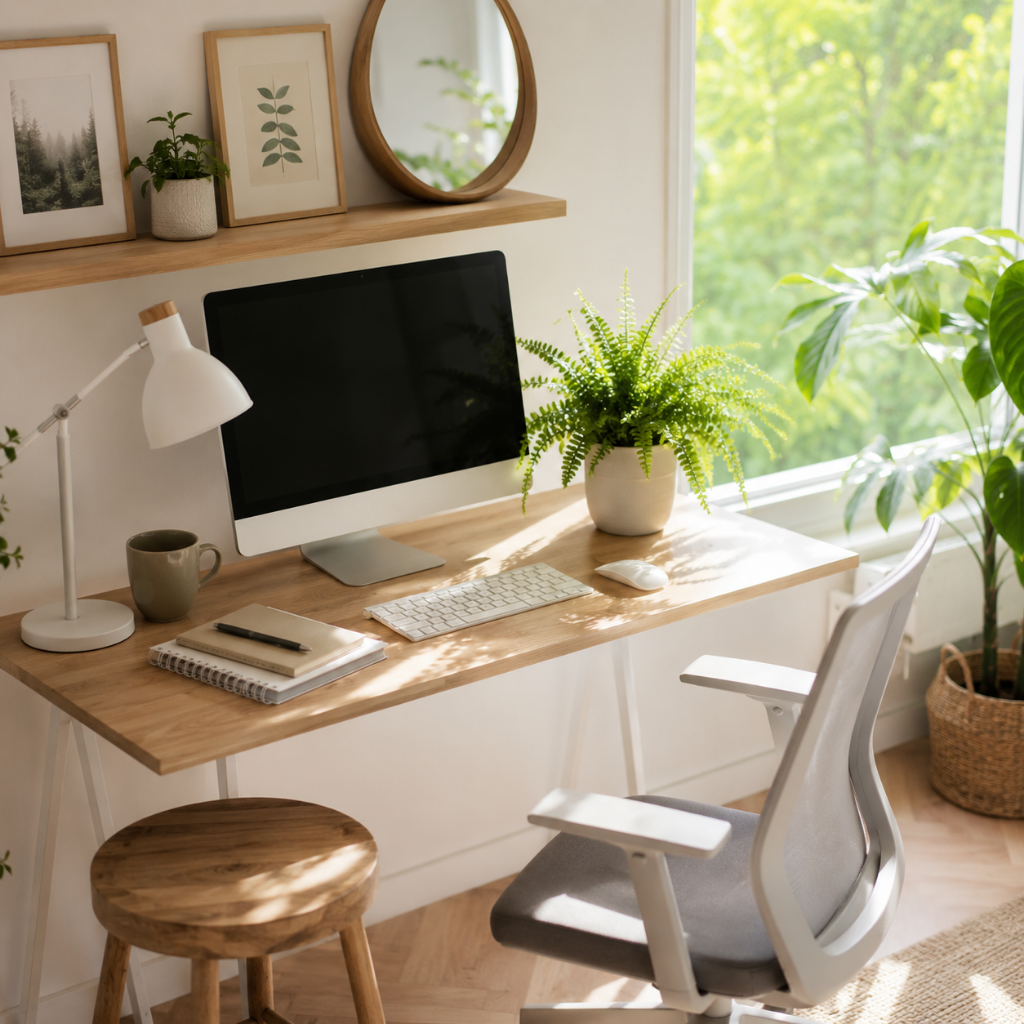
A small trailing plant on the corner of a desk does more for a room than people expect. It softens hard edges while quietly improving the air in the space, and it’s one of the cheapest upgrades a home office can get. Lighting works best layered rather than single source. Pair a focused desk lamp with a softer, warmer background light, and you avoid the flat, clinical feel that comes from overhead lighting alone.
Personal touches round things out, as long as they’re kept intentional rather than scattered. A small ceramic souvenir from a trip, sitting next to a favourite design book on the shelf, adds character in a way generic decor never quite manages.
Conclusion: Elevating Your Daily Workflow with a Balanced Creative Haven
Before calling the room finished, sit at the desk and actually test the space around it. Push the chair back fully. Check nothing blocks its path, because a cramped chair movement undoes a lot of good decisions made elsewhere in the room.
It’s worth spending a little more on solid materials for the desk and shelving too, given these are pieces relied on for years of daily work, not just a season or two. Get these details right, and the payoff is a workspace that quietly reduces stress through the day while actually helping you get more done, which was the point of building one in the first place. A well planned study room also tends to outlast changing habits and job roles, since good lighting, sensible storage, and clear desk space stay useful no matter what kind of work eventually fills the hours spent there.